The cult · the unconquered
The sun that could not be conquered.
He arrived in Rome as a black stone from Syria, in the luggage of an emperor of fourteen. Three generations later he was the last god the empire had, and a boy who had been given him as a child wrote down what it was like to love him.
§tradition — the cult; §result — the dates and the editions.
“From my childhood an extraordinary longing for the rays of the god penetrated deep into my soul; and from my earliest years my mind was so completely swayed by the light that illumines the heavens that not only did I desire to gaze intently at the sun, but whenever I walked abroad in the night season, when the firmament was clear and cloudless, I abandoned all else without exception and gave myself up to the beauties of the heavens.”
— Julian, Hymn to King Helios, 362, trans. Wilmer Cave Wright (Loeb, 1913)
The stone from Emesa
The god the Romans called Sol Invictus was not the old Roman sun. He came from Emesa in Syria, where he was worshipped as a stone — a baetyl — and where the Greek and Roman world identified him with the sun. Cassius Dio, writing about the year 218, says how the coup began:
“ … partly persuaded by the Sun-god, whom they call Elagabalus and worship devotedly, and also by some other oracular utterances.”
— Cassius Dio, Roman History LXXIX, trans. Earnest Cary (Loeb, 1927)
A baetyl is a stone that is worshipped — a dressed or undressed rock understood as the god's seat or the god himself, and often said to have fallen from the sky. It is the opposite of an image: no face, no body, no story, just the object and the place. The Greeks and Romans who met such stones regularly identified the god inside them with a god of their own, and in Emesa's case that god was the sun.
The name matters. The god was Emesene; the sun was the frame through which Rome understood him. Dio's editor puts it exactly: in Rome he was officially styled Deus Sol Elagabalus or Invictus Sol Elagabalus — the foreign name and the Roman title worn together.
The women who made an emperor
The coup of 218 was not the work of a boy. It was the work of his grandmother. Julia Maesa was the sister-in-law of a murdered emperor and the aunt of another, and when her family fell out of favour she went home to Emesa with her daughters and her money and set about making an emperor out of a fourteen-year-old. Dio's account leaves no doubt about who was doing the work: the soldiers were bought, the boy was dressed in his tutor's clothes and smuggled into camp at night, and by dawn the legion had a new candidate.
The dynasty is a chain of women — Maesa, her daughter Soaemias, and then Mamaea, who replaced one boy emperor with another and was murdered with him. Roman history is usually written as a list of men; this stretch of it is not. The sun's cult came into Rome in the baggage of a family of priestesses, and the scandalised tone of our sources is partly the tone of men watching women run an empire.
It is worth saying because it changes the picture. The arrival of Sol Invictus is not a story of soldiers and senators choosing a god. It is a story of a provincial family with a hereditary priesthood using the only asset it had — a claim on the sun — to take the state.
The boy who brought him
Marcus Aurelius Antoninus — whom history calls Elagabalus — was made emperor at fourteen by his grandmother and her allies, and spent the next four years doing something no Roman had done: putting a Syrian god at the centre of the Roman state. The stone was set in a temple on the Palatine, the god was married to a goddess, the emperor married a Vestal, and the city was scandalised.
Our sources for all of this are hostile — Dio and Herodian were writing for an audience that already knew the verdict — and it is worth saying so plainly. What is not in doubt is the outcome: he was murdered at eighteen, his memory was condemned, and the god was sent home.
How to read a hostile source
Almost everything vivid about Elagabalus comes from men who hated him, writing after he was dead, for readers who already agreed. Dio was a senator; Herodian wrote for an educated audience that liked its emperors either virtuous or punished; the Historia Augusta invents freely. The stories of the golden chamber-pot, the dinner of fake food, the marriage to a Vestal, the chariot drawn by women — these are not neutral reports. They are the standard equipment of Roman invective, and the standard equipment has a purpose: to show that a bad emperor is bad in his body, his household and his religion at once.
Which does not mean the cult did not happen. The coins, the temple, the priesthood and the calendar are public facts, and public facts do not need a biographer's approval. What the invective tells us is how the Roman elite felt about a boy from Emesa putting a foreign stone above their gods — and that feeling is itself a piece of evidence, for what the old order thought it was losing.
So the page uses Dio for the fact of the cult and not for the character of the boy. That is not scepticism for its own sake; it is the difference between a source telling you what happened and a source telling you what it thought of what happened.
Aurelian, 274
Fifty years later, an emperor who had held the empire together did what the boy could not: he made the sun respectable. The Historia Augusta, in the life of Aurelian, gives the whole institution in one sentence:
“He constructed the Temple of the Sun, and he founded its college of pontiffs; and he also allotted funds for making repairs and paying attendants.”
— Historia Augusta, Divus Aurelianus XXXV.3, trans. David Magie (Loeb, 1932)
Rome now had a temple, a priesthood and a funded cult of the unconquered sun, with games and a place in the calendar. His coins carry SOLI INVICTO; the emperor wears the radiate crown that the god wears. The sun was no longer a name in a list. He was the god of the state.
What “unconquered” meant
Invictus is a word of triumph — it belongs to emperors before it belongs to gods. Calling the sun unconquered is not a statement about astronomy; it is a statement about what people feared. The sun goes down, the sun goes south, the day shortens, and the whole ancient world knew it could, in principle, not come back. The title is an answer to that fear, made every morning.
The games and the bread
A temple needs a calendar, and the Historia Augusta gives Aurelian's in the next chapter: the people were given “the pleasures of the stage, the circus, the hunts, the gladiators, a naumachia” — the whole apparatus of a Roman holiday, staged for the god. Games were how a Roman god was thanked in public; the sun got the biggest.
And then, in the same breath, the strangest and most human thing in the life. The people had been promised golden crowns if the eastern war were won. Aurelian came back with no gold to spare, so — says the biographer — he had crowns made of bread, and gave one to each person, and the bread became a daily loaf for life, handed on to children after them. A bread dole, in the shape of a crown, from the emperor of the unconquered sun.
It is worth sitting with, because it is the cult at the level of a kitchen: the sun's temple and the sun's bread arrive together. Whatever the theology was doing in the senatorial class, what the city received from the sun's emperor was a loaf and a day off.
The day of rest
Constantine is the hinge, and he is more ambiguous than either side of the argument likes. He kept the sun on his coinage long after he had turned to the Christians — soli invicto comiti, “to the unconquered sun, his companion” — and the arch that celebrates his victory carries solar imagery alongside the Christian. In 321 an imperial law ordered the courts to rest on the day of the sun, which is the day the empire still rests on.
Whether that is a Christian emperor borrowing the sun's day, or a solar emperor sliding into Christianity, or simply a state that had never much distinguished the two, is not a question the evidence settles. What it does show is that “the day of the sun” was already a public institution before it was a Christian one — the week itself carries the cult.
Mithras, and a caution
No page on Sol Invictus gets far without Mithras, and this one will not go far. The two are constantly run together — the sun-god of the mysteries, the bull-slayer, the soldiers' cult — and the modern habit of treating them as one thing is mostly an artefact of how the evidence has been popularised.
What can be said plainly: Mithras was a mystery cult with its own initiations, its own sanctuaries and its own imagery, in which the sun plays a role but is not the object; Sol Invictus was a public cult of the Roman state, with a temple, a priesthood and games. They met in the same empire, in the same century, and they borrowed from each other. Whether they were “the same god” is not a question our sources answer, and the honest position is that the identification is a modern convenience.
Held, and cited not quoted: Halsberghe on the cult of Sol Invictus, Salzman on the calendar of 354, Hijmans on the sun in Roman art. The Mithraic material itself is not on this shelf, which is why this section is short and the Mithras essay will need its own acquisition.
Why the sun, of all gods
There is a question underneath all of this that the sources do not ask, because the answer seemed obvious: why should the sun be the god of the empire?
Because it is the one god everyone can see. A mystery cult asks you to be initiated; a civic cult asks you to be in the right city; philosophy asks you to be educated. The sun asks nothing, and is visible from Britain to Mesopotamia, to the soldier on the wall and the farmer in the field and the emperor on the throne — the same sun, at the same hour, doing the same thing. For an empire of a hundred peoples, that is an extraordinary convenience. One god, no translation problem.
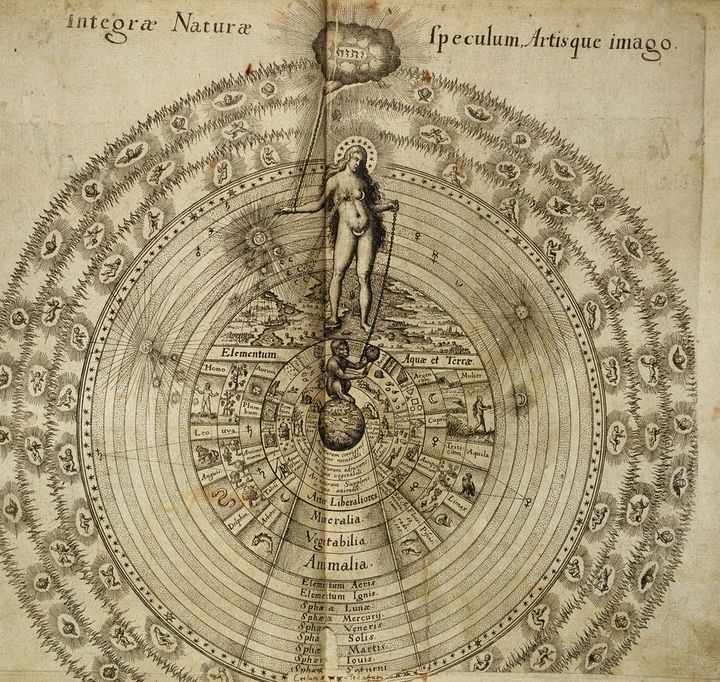
And it is the god of height: the sun is highest at noon, and the emperor is highest among men. The radiate crown is not a decoration but a claim — the ruler wearing the light he rules under. When the emperor is dominus et deus and the god is invictus, the two words are doing the same work.
There is a shadow to it, which the cult acknowledged and the modern retelling usually drops. A sun that can be conquered cannot fail, and a power that cannot fail does not need to be kind. The same century that made the sun the god of the state also made the emperor's authority absolute; the god who sees everything from above is a comfortable god for a ruler to point at.
The last theology
Constantine kept the sun on his coins for years after he had turned to the Christians — SOLI INVICTO COMITI, "to the unconquered sun, his companion" — and in 321 he made the day of the sun a day of rest. Half a century later Julian tried to put the god back at the centre of a philosophy, and wrote the hymn quoted at the top of this page.
By then the sun had absorbed everything. Macrobius, in the Saturnalia, sets out the argument that the gods are one god:
“Orpheus, showing that Liber and the Sun are one and the same god …”
— Macrobius, Saturnalia I.18, our translation
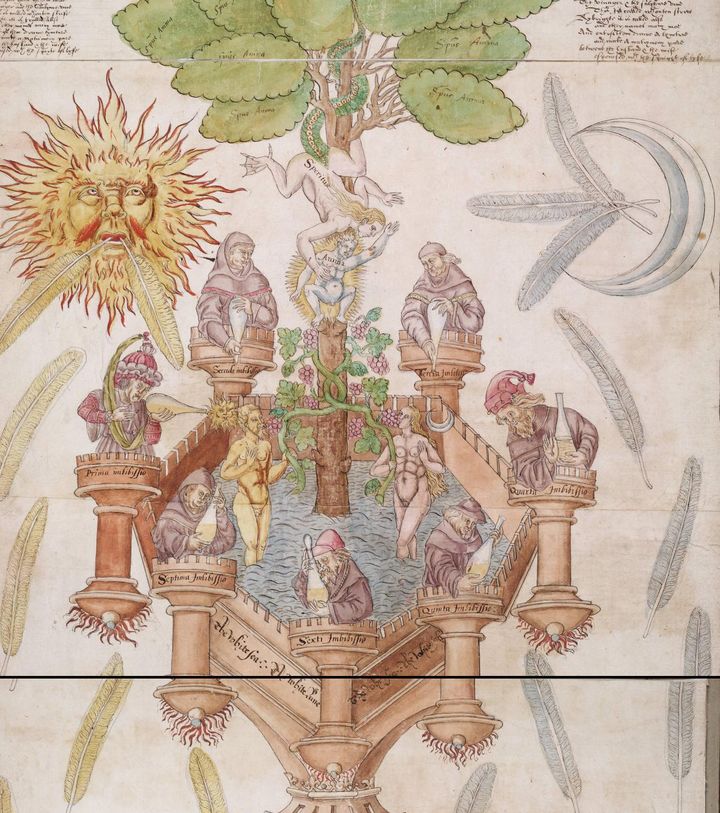
Liber is Bacchus. The sun and the wine-god are the same — which is either the end of a long argument or the beginning of one, and which tells you what the cult had become: not a god among gods, but the light behind them.
The twenty-fifth of December
The calendar of 354 — the Chronographus, a Roman almanack with a list of festivals — marks 25 December as the Natalis Invicti, the birthday of the unconquered sun. It is the one ancient attestation of the date, and it is nearly all we have.
Published null: the shelf holds Mommsen's edition of the Chronica Minora, but not in a form in which the calendar's December entries can be read from the scan. So the date is cited, not quoted. That is the honest state of the evidence here, and it is why the paragraph below is careful.
Whether Christmas took that date from the sun is the question everyone asks, and the honest answer is that it is contested. One argument holds that the Church chose the day to occupy a festival it could not abolish; another holds that 25 December was calculated — nine months from 25 March, the traditional date of the crucifixion, on the ancient idea that a great man dies on the day he was conceived. The second argument has the older texts behind it. Both are arguments. Neither is a fact, and the site will not pretend otherwise.
What we have
| Source | Date | What it gives | Trust |
|---|---|---|---|
| Cassius Dio LXXIX–LXXX | c. 220 | the Emesene god, the coup, the official style Deus Sol Elagabalus | senatorial, hostile, partly epitomised |
| Historia Augusta, Aurelianus | c. 395 | the temple, the college of pontiffs, the games, the bread dole | unreliable text; the institution is corroborated by the coinage |
| Julian, Hymn to King Helios | 362 | the theology, and the one first-person account of loving the god | devotional, Neoplatonic, not cult practice |
| Macrobius, Saturnalia I | c. 430 | the syncretism: Liber and Sol as one | antiquarian, late |
| The Calendar of 354 | 354 | 25 December as the Natalis Invicti | cited, not quoted — see the null above |
| Coins; the law of 321 | 3rd–4th c. | SOLI INVICTO COMITI; the day of rest | cited; not held |
What is left
The god is gone, and the date is ours. What survives of Sol Invictus is a habit: the turn of the year, the lights, the feast — and the sentence underneath it, which the empire said in stone and the almanack says every December. The sun goes down. It comes back.